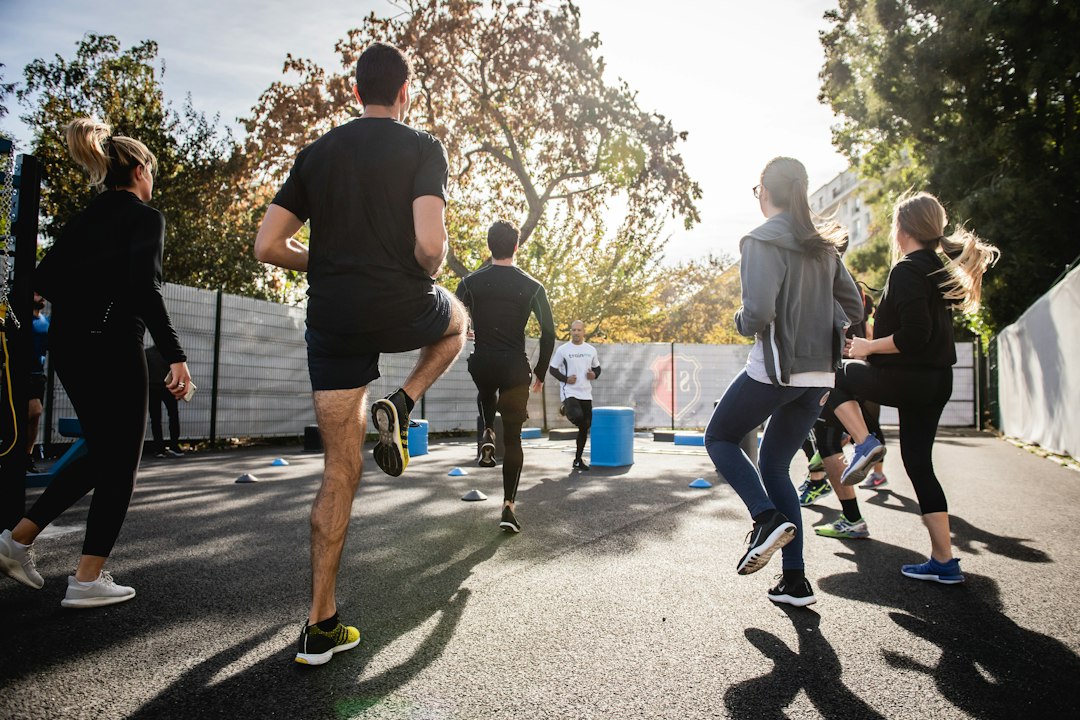
If you run, you’ve probably heard people recommend strength training for runners. The idea is simple: short, purposeful lifting sessions can help your stride feel smoother, your posture stay steadier, and your legs hold form when fatigue stacks up. The tougher part is execution—choosing the right exercises, placing sessions inside a busy running week, progressing without lingering soreness, and keeping everything practical at home or in a crowded gym. This long-form guide gives you a clear 12‑week plan, weekly templates, compact workouts you can finish in about 40–50 minutes, form cues you’ll actually remember on the next run, and recovery ideas that support your miles rather than compete with them.
strength training for runners: the big picture
Runners thrive on rhythm. When the gym supports that rhythm, the results show up as calmer stride mechanics, more efficient ground contact, and a body that feels organized late in a run. The goal here is not to chase powerlifting totals; it is to build usable strength for running. That means training fundamental patterns—squat, hinge, lunge, push, pull, and carry—while controlling the total dose so your long run and quality workouts still feel sharp.
Think of your week as a landscape with a few tall peaks (key runs), some rolling hills (easy miles), and a couple of short, practical gym sessions that act like trail maintenance. These sessions reinforce posture, hip stability, and lower‑leg capacity, so you can spend more time moving efficiently and less time wrestling wobbles or tightness. The magic is not in exotic exercises; it’s in consistently doing the simple things well.
What this approach emphasizes:
- Two strength sessions per week most of the year; during base mileage you may add one brief accessory day.
- Forty to fifty purposeful minutes per session, built around 4–6 total exercises.
- Small, steady progress: add a little load or a set or tempo—not all three at once.
- Exercise choices that travel easily between home and gym, so equipment never becomes the excuse.
What this approach avoids: marathon gym sessions, soreness that bleeds into key runs, and a grab‑bag of isolation moves that look busy but don’t carry over well to running. If you finish a session thinking, “I could repeat that next week,” you’re on the right track.
How to place strength days in your running week
Scheduling matters more than most lifters realize. The same workout can feel great or awful depending on where it lands relative to long runs and speed work. Aim to pair lifting with easy or moderate run days, and keep your highest‑stress running days primarily about running.
Three practical weekly templates
- Low‑to‑moderate mileage (3–4 runs/week): Monday easy run + Strength A; Wednesday workout or fartlek; Friday easy + Strength B; weekend long run. Optional: a short accessory circuit on Tuesday or Thursday during base phases.
- Intermediate mileage (4–5 runs/week): Monday rest/mobility + Strength A; Tuesday intervals or tempo; Thursday easy + Strength B; Saturday long run. If legs feel flat on Thursday, move Strength B to Friday.
- High mileage (6+ runs/week): Two short sessions: Monday easy jog AM + Strength A PM (trimmed to 30–35 minutes); Thursday easy run + Strength B PM. Keep both sessions crisp.
A useful rule is “lift after, not before” on days with an easy run. Running uses the exact tissues and timing you care about most; lifting afterward reduces the chance that your legs will feel heavy or uncoordinated when you need them most. Another practical move is to keep at least 24 hours between a heavier hinge or squat session and an interval workout or hill session.
Run‑lift sequencing also depends on your routine. Morning runners often lift in the evening, using the day to re‑fuel and re‑hydrate. Evening runners can do a brief mobility reset the next morning—hip flexor stretch, gentle calf work, 10 squat‑to‑stands—so tissues don’t feel sticky when you step out the door.
Finally, track your response. If you notice that a particular day leaves your stride feeling flat, trim one set from the main lower‑body lift next week or move that session one day earlier. Small schedule edits often solve the problem without changing the plan itself.
Equipment and simple setups (home or gym)
You can run this plan with minimal gear. The tool matters less than the movement pattern and your ability to set up quickly without wandering the gym hunting for equipment. Start with what you have; upgrade only if a new tool solves a real problem.
- Minimal home kit: Two adjustable dumbbells or a pair of kettlebells (8–24 kg range depending on your strength), a sturdy backpack for loaded carries, a loop band, and a doorframe pull‑up bar or suspension trainer.
- Compact extras: A hip circle band, a foam roller, a yoga mat, and a small step or box for step‑ups. These smooth transitions and keep rest periods honest.
- Gym upgrade: A squat rack with safety pins, a barbell and plates, a cable stack, an adjustable bench, and ideally a trap bar (a hinge pattern many runners find intuitive).
Set up “stations” to reduce friction. At home, place a kettlebell near a mat and band; do two or three exercises back‑to‑back before moving anything. In a busy gym, plan a simple alternative variation for each movement—if the rack is taken for front squats, do goblet squats or split squats. The pattern you train is the point; the tool is flexible.
If you’re new to lifting, start with loads that let you move crisply while leaving a couple of good reps in reserve. You’ll progress faster by accumulating clean repetitions than by grinding to failure.
Movement quality: memorable form cues
Technique is a performance tool, not a perfectionist trap. A few simple cues keep your lifting crisp even when you’re short on time or energy. Use these bite‑size prompts; repeat them quietly before each set.
- Squat (goblet, front, or back): Feet shoulder width, “screw” feet into the floor, ribs quiet, sit between your hips, knees track over mid‑foot, push the floor away to stand tall.
- Hinge (Romanian or trap‑bar deadlift): Soft knees, long spine, push hips back as if closing a car door, feel hamstrings load, stand by driving the floor away.
- Lunge/split squat: Tall ribcage, front knee over mid‑foot, back knee lowers under control, press through the whole foot to rise.
- Push (push‑ups, dumbbell bench): Shoulders “in back pockets,” ribs stay quiet, elbows at roughly 45 degrees off your sides, finish by reaching long through the hands.
- Pull (rows, pull‑ups): Chest tall, shoulder blades down and back, pull with the back—not the neck—then lower under control.
- Carry (suitcase or farmer’s): Stand tall, zip the ribs, walk smooth as if balancing a book on your head, keep handles quiet (no banging).
Tempo helps teach control without huge loads. Lower for two or three seconds, pause a beat at the bottom, then stand or press with intent. Video a set from the side occasionally to check knee and hip tracking. You don’t need a coach for every rep, but you do need a consistent checklist.
Common form detours: letting the chest collapse in squats, turning hinges into squats by bending knees too much, shrugging through rows, and holding breath the entire set. Fixes are straightforward: lighten the load, slow down a hair, and practice one cue per set.
Warm-ups and mobility micro-routines
Good warm‑ups are brief and pointed. They prime the hips and ankles, wake the trunk, and groove the first pattern you’ll train. Eight minutes is enough for most sessions. Then start your first lift while you feel ready—not bored.
- 90/90 hip switches × 6 per side with tall posture
- World’s greatest lunge × 3 per side with a brief thoracic rotation
- Ankle rocks × 10 per side, knee over toes, heel down
- Glute bridge × 10 with a two‑second squeeze
- Bodyweight squat × 10 with a controlled two‑second pause at the bottom
Between sets, replace idle scrolling with “micro‑mobility”—20 seconds of calf raises, a brief hip flexor stretch, or a few controlled hip circles. These tiny doses add up and often make the next day’s run feel smoother.
If you sit for long stretches, do a simple daily “reset”: one minute per side of a tall half‑kneeling hip flexor stretch, 10 slow calf raises on a step, and 10 air squats with a pause. Think of it as brushing your teeth for your lower body.
A 12-week plan you can actually follow
The plan uses two sessions per week—Strength A and Strength B—across three phases with a consolidation week. If you occasionally add a third day during base mileage, keep it a brisk 20–30 minutes.
- Weeks 1–4 (Adaptation): Learn the movements, build volume with moderate loads and controlled tempo, and finish sets with two to three reps “in the tank.” Expect mild muscle awareness, not lingering soreness.
- Weeks 5–8 (Build): Increase load or add a set on the main lifts. Trim tempo slightly and move with intent. Keep about two good reps in reserve on your last set.
- Weeks 9–11 (Peak support): Maintain intensity while trimming a bit of volume. Prioritize crisp doubles and triples for a power‑flavored hinge and moderate sets for accessories.
- Week 12 (Consolidate): Halve your sets, keep technique sharp, and arrive fresh for the next running block or race‑specific phase.
Steer the plan with your race calendar. In base phases, you can tolerate more volume. As race day approaches, scale back sets but keep key patterns alive so your stride still feels coordinated and springy. If a demanding run is coming—like a long progression or a tough interval set—trim the prior strength session by one set per movement or pick lighter variations.
Simple readiness checks help decide day‑to‑day adjustments: if easy pace feels unusually labored for two days in a row, reduce the next lift by 5–10% or omit one accessory and go home feeling “ready for tomorrow.” Consistency wins.
Sample workouts: Strength A, Strength B, and an optional short day
These sessions use supersets (two moves back‑to‑back) to keep time tight without rushing. Rest 60–120 seconds between rounds. Choose loads that allow clean form with about two reps in reserve on most sets.
Strength A (lower/hinge emphasis)
- A1 Trap‑bar deadlift or Romanian deadlift 3–4 sets × 5 reps, two‑second lower
- A2 Tall‑kneeling anti‑rotation press (Pallof) 3–4 × 8 per side, smooth
- B1 Split squat (rear foot elevated if comfortable) 3 × 6–8 per leg
- B2 Single‑arm row (dumbbell or cable) 3 × 8–10 per arm
- C1 Suitcase carry 3 × 30–45 seconds per side
- C2 Calf raise 3 × 12–15 with a brief pause at the top
Strength B (squat/push emphasis)
- A1 Goblet squat or front squat 3–4 × 5–6 reps, steady tempo
- A2 Half‑kneeling hip flexor stretch with reach 3–4 × 20 seconds per side
- B1 Push‑up or dumbbell bench press 3 × 6–10 reps
- B2 Hip hinge accessory (hip thrust or banded RDL) 3 × 8–10
- C1 Side plank 3 × 20–40 seconds per side
- C2 Step‑up (medium height) 3 × 8 per leg, smooth control
Optional short accessory day (base phase only, 20–30 minutes): Three rounds—kettlebell swings 12, chin‑ups or assisted 5–8, single‑leg hinge 8 per leg, farmer’s carry 40 seconds. Keep it brisk and stop before it drains your legs.
Travel or no‑gym week? Swap deadlifts for single‑leg RDLs with a backpack, do push‑ups and band rows, and split squats with your back foot on a couch. The pattern is the point; the tool is flexible.
Progression and auto-regulation made simple
Paper progressions look perfect. Real weeks include late meetings, rough sleep, heat waves, and long commutes. Auto‑regulation keeps your plan honest and repeatable. Use these rules to steer training without overthinking it.
- Rule 1: One knob at a time. Increase load or sets or tempo difficulty. If split squats felt smooth for 3 × 8, add 2.5–5% load next week or add a fourth set—not both.
- Rule 2: Keep two in the tank. End most sets with roughly two high‑quality reps left. Your legs should feel primed, not drained, for tomorrow’s miles.
- Rule 3: Earn new range. Don’t force depth in squats or lunges. Improve it gradually with pauses and control; strength will follow.
- Rule 4: Micro‑deloads when life gets loud. If you feel unusually sluggish, trim one set from every lift this week while keeping technique crisp. Resume normal the following week.
Choosing loads can be as simple as using a perceived effort scale. On main lifts aim for a “7–8 out of 10” feeling, where you could perform two more solid reps if asked. On accessories, a “7 out of 10” is plenty. If your goal is a smoother stride rather than gym PRs, you’ll be surprised how far this moderate effort takes you.
Keep a tiny log: sets × reps × load for the main lifts, a one‑sentence note about how it felt, and a “next step” line (for example, “Add 5 lb to deadlift next time; keep split squats as is”). Over months, these notes turn into confidence because you can see that you’re putting down bricks, not just hoping for progress.
Adjust by goal: 5K speed, half marathon durability, and trail steadiness
Not every runner needs the same emphasis. Keep the structure but tilt the focus toward what your course demands.
- 5K/10K speed: Pull back on total volume and touch a bit of “snap.” Keep trap‑bar deadlifts at 3 × 3–4 with solid intent; add low‑amplitude plyo options like line hops or low box step‑downs (2 × 6–8) after your warm‑up once or twice a week. The goal is to feel springy, not toasted.
- Half marathon/marathon: In base, keep volume steady; as race day nears, trim sets but maintain hinges, split squats, and carries. A small change—extending suitcase carries to 45–60 seconds per side—builds posture endurance noticeable after mile 15.
- Trail and ultra: Add lateral strength and balance. Include lateral lunges, single‑leg hinges with reach, and suitcase carries over uneven ground if available. Keep ankles and hips happy with frequent micro‑mobility between sets. If your routes are rocky, light eccentric calf work (three‑second lowers) pays off.
Two specialty notes:
- Hilly courses: Twice weekly, include a hinge variation and follow with calf work (straight‑knee and bent‑knee). Hills tax the posterior chain and lower legs; a little strength work here makes climbs feel steadier.
- Warm climates: Heat stacks stress. Trim one accessory per session during hot weeks and emphasize hydration and timing (lift later in the day if mornings feel depleted).
Core and lower-leg work that carries onto the run
Running is a series of small battles against rotation and side‑to‑side sway. Your trunk’s job is to manage force, not just crunch. Choose exercises that teach your ribs and pelvis to cooperate while your arms and legs move.
- Anti‑extension: Dead bugs (3 × 6 per side), slow mountain climbers (3 × 8 per side)
- Anti‑rotation: Pallof press variations (3 × 8 per side), half‑kneeling cable chops (3 × 8 per side)
- Lateral stability: Side plank (3 × 20–40 seconds), suitcase carry (3 × 30–45 seconds per side)
Lower‑leg care is the unsung hero for many runners. Two or three short bouts each week build helpful rhythm:
- Straight‑knee calf raises for the gastrocnemius (12–15 controlled reps with a pause at the top)
- Bent‑knee calf raises for the soleus (12–15 controlled reps)
- Tibialis raises (heels on floor, raise toes toward shins, 12–15 reps)
- Short‑foot drills (gently doming the arch while standing, 20–30 seconds)
Thread one or two of these into Strength A and Strength B, or do them at home on non‑lifting days as a quick five‑minute routine. The goal is useful ankle stiffness and resilient feet, not a pump that lingers.
Recovery, fueling, and readiness tracking
Simple, steady habits drive performance. A mix of carbs and protein within an hour or two of training, enough hydration to keep urine a pale yellow most of the day, and regular meals that match your workload provide a solid base. Spreading protein across the day can support adaptation, and a small evening snack after a gym session may help the next morning’s run feel smoother.
Track a few low‑effort signals to steer the week without turning recovery into a second job:
- Sleep quality: If you wake groggy or toss at night for two days straight, trim one set from the gym session or push it back 24 hours.
- Leg heaviness on easy runs: If shuffle pace feels unusually labored two days in a row, scale back the next lift by one exercise or reduce loads 5–10%.
- Appetite and mood: A flat appetite and grumpy mood can hint that overall stress is up. Keep the session brief and technique‑focused that day.
- Footnotes in your log: Add one sentence per session about how you felt. Over time, patterns appear that help you plan better.
Fancy tools are optional. Heart‑rate variability, resting heart rate, and step counts can add context, but your log, your legs, and your calendar remain the most reliable guides. Stay curious, adjust in small ways, and note what worked.
Troubleshooting, race-week tweaks, and long-term maintenance
Even solid plans wobble in the real world. Here are frequent snags with practical fixes you can try in the very next session.
- Problem: Sore quads before a workout or long run. Fix: Reduce squat volume the day prior, favor hinges or split squats with a slower lower, and keep the last set in reserve.
- Problem: Calves feel tight most mornings. Fix: Add two or three short bouts of calf raises throughout the day, include ankle rocks in every warm‑up, and keep stride relaxed on easy runs.
- Problem: Time crunch. Fix: Run the “A block” only—one main lift, one core move, and a carry. Twenty‑five minutes well spent beats skipping entirely.
- Problem: Technique breaks down as sets progress. Fix: Drop load slightly and add a one‑ or two‑second pause at the bottom of each rep. Record a quick side‑view video to check knee and hip tracking.
- Problem: Can’t find a rack or key machine. Fix: Swap to dumbbell variations (goblet squat, RDLs, one‑arm rows). The pattern matters more than the tool.
- Problem: The plan works but feels stale. Fix: Keep the pattern but rotate the tool—front squat to goblet, trap‑bar deadlift to Romanian deadlift, cable row to dumbbell row.
Race week needs a light touch—keep the wiring, skip the fatigue. Do one short session four or five days out: two sets each of an easy goblet squat, a light hinge, and a brief suitcase carry. Move smoothly, stop well before strain, and let your nervous system remember the groove.
After your goal race, take one to two easy weeks with mobility, light carries, and bodyweight patterns. Then restart the 12‑week plan at slightly lower sets and tempo for a gentle ramp. Over the long term, think in seasons: during base phases, spend a bit more time in the gym; as races near, maintain key patterns with lower volume. The easiest plan to keep is the one that fits inside your actual life.
For more sport‑specific training ideas and seasonal plans, explore the Sports hub at MStyle4Life. You’ll find running, strength, and cross‑training articles that pair well with the plan you just read.
