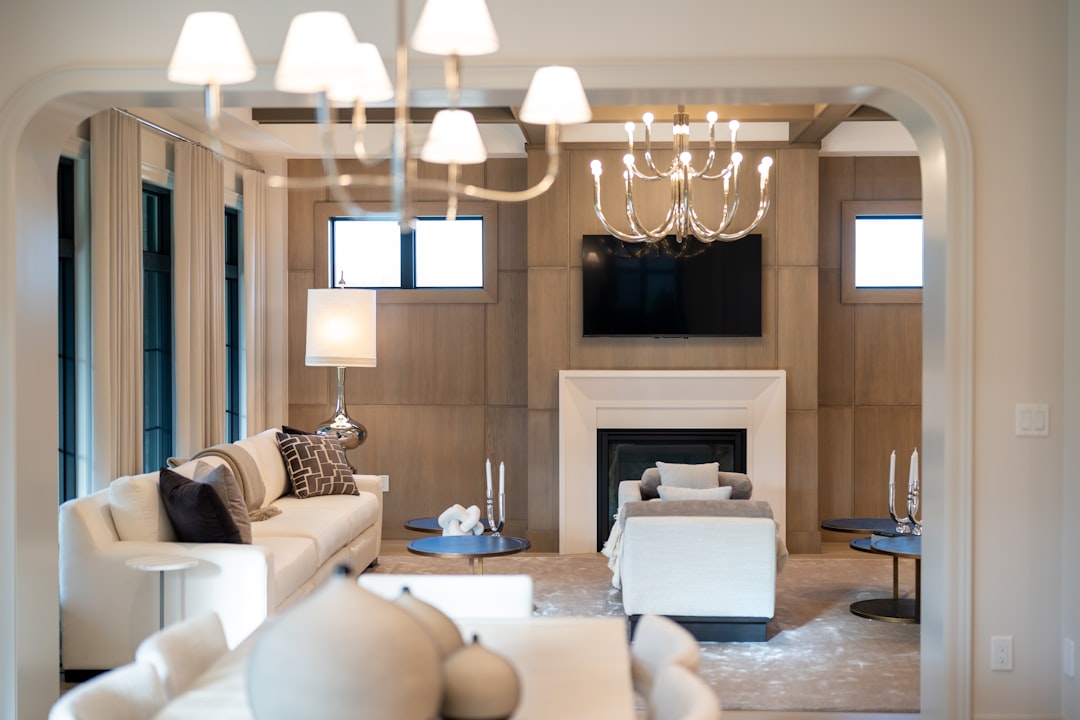
If you are searching for Living Room Lighting Ideas, I would start by treating light as part of the furniture. It shapes how the room feels at night, how colors read in daylight, and how comfortable people are when they settle in for conversation, reading, or a quiet evening. A good living room rarely relies on one bright fixture. It feels composed because the light has layers, direction, and a clear purpose.
That is why this topic matters so much in home décor. A sofa can be beautiful, a rug can be the right size, and the color palette can be carefully chosen, but the room still feels unfinished if the lighting works against the rest of the design. The best Living Room Lighting Ideas help a room switch roles smoothly. The same space can feel calm in the morning, practical in the afternoon, and soft enough for evening use without turning harsh.
This guide focuses on the decisions that make the biggest difference. I will walk through how to read the room, how to build layers, how to choose bulbs, where to place fixtures, and how to keep the whole arrangement flexible as your needs change. The aim is not to buy more lights. The aim is to make every light in the room earn its place.
Why Living Room Lighting Ideas Matter More Than One Pretty Fixture
It is easy to start with a lamp you like and build everything around it. That often leads to a room that looks good in one corner and awkward everywhere else. One pendant, one ceiling fan light, or one oversized floor lamp can only do so much. The living room has too many jobs for a single source to handle. People watch television there. They talk there. They work there. They read there. Sometimes all of that happens in the same hour.
When the room is lit well, the furniture arrangement feels more intentional. A reading chair becomes a destination instead of a forgotten accent. A coffee table stops disappearing into shadow. Artwork has dimension. Wood grain, fabric weave, and wall color all become easier to appreciate. Good lighting makes the room feel more expensive, even when the furniture itself is simple.
There is also a practical side that people overlook. Poor lighting can make a room feel smaller, colder, or more cluttered than it really is. Harsh overhead light creates glare and flatness. Dim corners make the room seem unused. By contrast, a thoughtful mix of sources creates rhythm. The eye moves around the room instead of landing on a single bright spot.
That is the real value of Living Room Lighting Ideas. They do not just tell you what fixture to buy. They help you understand how light behaves in the room you already have. Once you see lighting as a design system, not an accessory, the whole space starts making more sense.
Read the Room Before You Buy Anything
The best lighting plan begins with observation. Before you add a lamp, stand in the room at different times of day and notice where the shadows land. Look at the windows, the wall color, the ceiling height, and the way your furniture is grouped. A room with large south-facing windows has different needs from a basement den or a north-facing family room. A long, narrow room needs a different approach from a square one.
Start by asking what you actually do in the room. If the space is mostly for conversation, softer ambient light matters more than a strong task light. If the room doubles as a reading corner or a work zone, you need more controlled light near the seat. If television is the main activity, glare control becomes the priority. The room itself should tell you what kind of lighting to add, rather than the other way around.
It helps to sketch the room on paper. Mark the sofa, chairs, table, shelves, windows, outlets, and the places where people usually sit. Then mark the areas that feel too dark. This simple map reveals where a lamp would actually help and where it would just add visual clutter. A small room may need one strong floor lamp and two smaller table lamps. A larger room may need several modest sources spread across the space.
If you want more room-by-room inspiration, browse the MStyle4Life home décor guides for related styling ideas. Keeping the room in context is more useful than copying a photo that was styled for a different layout, ceiling height, or evening mood.
The more carefully you read the room, the fewer expensive mistakes you make later. That is one of the most overlooked Living Room Lighting Ideas of all. The plan starts with what is already there.
Build the Room in Layers, Not in One Blast of Light
The simplest way to think about lighting is in three layers. Ambient light sets the base level. Task light supports a specific activity. Accent light adds depth and focus. When these layers work together, the room feels relaxed and complete. When one layer dominates, the room feels either too flat or too busy.
Ambient light is the overall wash of light that lets the room function. It usually comes from ceiling fixtures, recessed lights, or a central pendant. The goal is evenness, not intensity. You want enough light to move around safely and comfortably without turning the room into a waiting room. If your only source is a bright overhead fixture, try softening it with dimming or by adding smaller lights around the room.
Task light should be placed where people actually do things. A reading chair needs a focused lamp. A side table near the sofa might need a smaller lamp for books and drinks. If someone uses the living room table for puzzles, board games, or laptop work, that spot needs direct light that does not spill everywhere. Task light should feel helpful, not intrusive.
Accent light is where the room starts feeling designed rather than simply lit. This might be a small picture light, a lamp that washes over a textured wall, a shelf light, or even a candle arrangement used with care. Accent lighting creates contrast. It tells the eye where to look next. Without it, the room can feel like a single broad plane with no depth.
Here is a simple way to test balance. Turn on only the ambient source. Then add task light. Then add accent light. Each step should make the room feel more comfortable, not more complicated. If one layer seems to cancel out the others, the arrangement needs adjustment. The strongest Living Room Lighting Ideas always respect layering first and style second.
Living Room Lighting Ideas for Small and Large Spaces
Room size changes everything. In a small living room, every fixture needs to work hard without making the space feel crowded. In a larger room, the problem is often the opposite. The lighting can become too sparse, leaving the center bright and the edges dead. Good design responds to scale.
In a small room, keep the visual weight of fixtures light. Choose slender floor lamps, compact table lamps, and wall-mounted options when possible. A large chandelier can overpower the room unless the proportions are very carefully chosen. If floor space is tight, use a lamp that lifts light upward rather than one with a broad base. That preserves circulation and keeps the room feeling open.
In a larger room, think in zones. A seating area may need one lighting cluster. A reading corner may need another. A fireplace, bookshelf, or art wall can become its own light story. The trick is to avoid lighting everything equally. Large rooms often look better when light is distributed in pockets, because that creates atmosphere and makes the space feel more intimate.
Ceiling height matters too. Low ceilings usually benefit from fixtures that spread light without hanging down too far. High ceilings can handle pendants, longer shades, or layered wall and floor lighting that pulls the visual field downward. If the room feels tall and cold, add fixtures that bring light closer to eye level. If it feels cramped, use uplight and lighter shades to create lift.
One of the most practical Living Room Lighting Ideas is to match the brightness to the room’s scale rather than the size of the bulb. A small room with too much output feels severe. A big room with too little output feels forgotten. Proportion matters more than raw wattage. Think about the room as a composition, not a container.
Choose Bulbs, Brightness, and Color Temperature With Care
Fixtures get attention, but bulbs determine how the room actually feels. The same lamp can look inviting or unpleasant depending on the bulb inside it. That is why bulb choice deserves as much thought as shade shape or base material. If the color temperature is off, even the best-designed room can feel wrong.
For a living room, warmer light usually feels more natural than a stark cool tone. Soft white and warm white options often suit evenings, while slightly brighter neutral bulbs can work in spaces that also need day-to-day visibility. A very cool bulb can make wood tones look pale and skin tones look tired. A very warm bulb can feel cozy, but it can also dull certain colors if used everywhere without balance.
Brightness should match function. A lamp beside a reading chair should be bright enough for the task without forcing the eyes to work too hard. A decorative lamp on a console table can be softer because it is there for atmosphere. A ceiling source that is too bright can flatten the room and draw attention to the ceiling instead of the furniture arrangement. The goal is usable light with a comfortable atmosphere.
Dimmers are one of the smartest upgrades you can make. They let the room shift from daytime activity to evening calm without swapping fixtures or bulbs. If you can install dimmers on major sources, do it. If you cannot, choose bulbs and lampshades that already soften the output. Fabric shades, frosted glass, and layered shades all help take the edge off brightness.
Pay attention to consistency as well. A room with wildly different bulb temperatures can feel disjointed. One lamp should not glow amber while the next looks icy blue. Aim for a family of tones that work together. Among all Living Room Lighting Ideas, this is one of the easiest to overlook and one of the easiest to fix.
Placement Rules That Keep the Room Balanced
Placement matters because light behaves like a visual weight. If all the brightness sits on one side of the room, the room feels lopsided. If every source is at the ceiling, the room feels detached. Good placement spreads light so that the furniture arrangement feels grounded.
Start with seating. A floor lamp should support the chair or sofa next to it, not just fill an empty corner. The shade should direct light where the person needs it, usually slightly behind or beside the shoulder rather than directly in the face. Table lamps work best when their height matches the scale of nearby furniture. A lamp that is too tall can dominate a side table. One that is too small can disappear.
Think about visual triangles. A sofa with two side lamps and a pendant above the table can create a balanced triangle of light. A reading nook might use a chair lamp, a wall sconce, and a low accent source nearby. These relationships make the room feel thoughtfully arranged instead of randomly lit.
Do not forget negative space. Not every corner needs a lamp, but every corner should feel intentional. Sometimes a dark corner can stay dark if it gives the room contrast and rest. Other times that same corner needs a small lamp to stop the room from feeling unfinished. The difference comes from how the corner relates to the rest of the layout.
A useful habit is to sit in each major seat after the lights are on. Look for glare, shadows, and visual clutter. Is the light behind the chair instead of beside it? Is the shade creating a hot spot on the wall? Is the table surface usable? Placement usually needs a few small corrections, not a full redesign. Among all Living Room Lighting Ideas, precise placement is the part that makes the room feel composed.
Match Lighting to Style Without Making the Room Feel Themed
Style matters, but it should never be the only driver. A living room can lean modern, classic, coastal, rustic, or eclectic, yet the lighting still needs to support comfort and function. The best rooms do not look like a showroom for one style label. They look lived-in and coherent.
If your room is modern, you may prefer cleaner lines, sculptural bases, and simple shades. If the room is traditional, a ceramic lamp, pleated shade, or brass finish might feel more natural. A casual room can handle woven textures, relaxed forms, and softer silhouettes. The style of the fixture should echo the room, not compete with it.
That said, too much matching can be a problem. If every lamp, frame, and table uses the same finish, the room can feel flat. A little contrast keeps it interesting. A matte lamp base can sit beside a polished table. A linen shade can balance a metal side table. Mixed materials often look more current than a perfectly coordinated set.
One question helps here. If you remove the lamp from the room, does the shape still make sense on its own? If the answer is yes, it is probably a good choice. If it only works because it copies everything else exactly, it may not add enough character. Lighting should act like a quiet layer of design, not a costume.
This is where many Living Room Lighting Ideas become useful beyond the room itself. They teach you to treat fixtures as part of the larger composition. The lamp is not only a source of light. It is also a visual anchor, a texture, and a line in the room’s overall sentence.
Smart Controls and Flexible Routines Make the Room Easier to Live In
A beautiful lighting plan should also be easy to use. If the room requires three switches, two remotes, and a reminder to turn certain lamps on in the right order, it will not feel smooth for long. Convenience matters because people use the living room every day, not only when everything is perfectly arranged for a photo.
Smart plugs, dimmers, and simple scenes can make a real difference. A morning setting might favor brighter ambient light. An evening setting might lower the ceiling source and leave a few lamps on. A movie setting might dim the room almost completely while still keeping a small amount of light near the seating area. These settings reduce friction and make the room feel responsive.
Even if you are not using a full smart system, create routines that are easy to remember. Maybe the floor lamp comes on first, then the console lamp, then the overhead source at a low setting. The point is to make the room feel intentional with very little effort. Good Living Room Lighting Ideas do not demand a production schedule. They support real life.
Smart control also helps with seasonal changes. Winter evenings often call for more layered light because the room gets dark earlier. Summer may need less overall output and more accent light during late sunsets. A flexible system lets the room adjust without needing new fixtures every few months.
If you live in a shared space, flexibility matters even more. One person may want bright light for reading while another wants a softer room for relaxing. Dimmers and multiple sources make it easier to meet both needs. That is one of the reasons a layered plan feels more thoughtful than a single dramatic fixture.
Common Mistakes and Simple Ways to Fix Them
Most lighting problems are not dramatic. They are small imbalances that keep adding up. The room looks almost right, but not quite. That is actually good news, because small changes often make a big difference.
Common mistake 1 is relying on one overhead fixture. The room feels washed out, and the corners disappear. The fix is to add at least two secondary sources at different heights. A floor lamp and a table lamp can change the entire mood.
Common mistake 2 is choosing bulbs that are too cool. The room starts to feel sharper than intended. Swap to a warmer bulb family and see how the walls, wood, and fabric change.
Common mistake 3 is placing lamps that are not scaled to the furniture. Oversized lamps can dominate a side table. Tiny lamps can look like afterthoughts. Match the fixture height and shade width to the furniture nearby.
Common mistake 4 is ignoring glare. A bare bulb or poorly aimed shade can make even a beautiful room unpleasant. Adjust shade angle, use diffused bulbs, or change the fixture type if the problem keeps returning.
Common mistake 5 is making every source decorative and none of them useful. A pretty lamp that does not light anything useful is just clutter with a cord. Each fixture should have a role.
Common mistake 6 is forgetting the walls. A room can feel dark simply because all the light stays low. Adding one wall sconce, picture light, or upward wash can make the space feel taller and more complete.
When you review your Living Room Lighting Ideas, look for one thing at a time. Fixing too many variables at once makes it hard to see what actually improved. Small edits, tested one by one, are usually enough.
Maintenance, Seasonal Updates, and a Simple Final Checklist
Lighting does not stay perfect on its own. Bulbs age, shades collect dust, and the room changes as furniture moves or seasons shift. A good lighting plan includes a little maintenance, because the small details affect how the room looks more than most people expect.
Wipe shades and lamp bases regularly. Dust softens light and makes the room feel duller than it really is. Check bulbs for mismatch, especially if you have replaced one lamp but not the others. If a shade has yellowed or warped, it may be time to replace it. Even a small refresh can make the whole room feel cleaner.
Seasonal updates also keep the room feeling current. In colder months, you may want warmer bulbs, lower dimmer settings, and more lamp-based light. In warmer months, the room might feel better with brighter but softer output and fewer sources turned on at once. You do not need to redesign the room every season. Small changes are enough.
If you want a simple way to review the room, use this checklist:
- Does the room have at least three useful layers of light?
- Are the bulbs consistent in tone?
- Can people read, talk, and relax without glare?
- Do the fixtures fit the scale of the furniture?
- Are the darkest corners intentional, not accidental?
- Can the room shift from day use to evening use with minimal effort?
If the answer is yes to most of those questions, the room is probably working well. If not, the next adjustment is usually smaller than you think. A better bulb, a different shade, a moved lamp, or a dimmer can change the whole experience.
That is the real takeaway from Living Room Lighting Ideas. Good lighting is not about showing off a fixture. It is about building a room that feels easy to live in, easy to use, and quietly finished from every angle.
