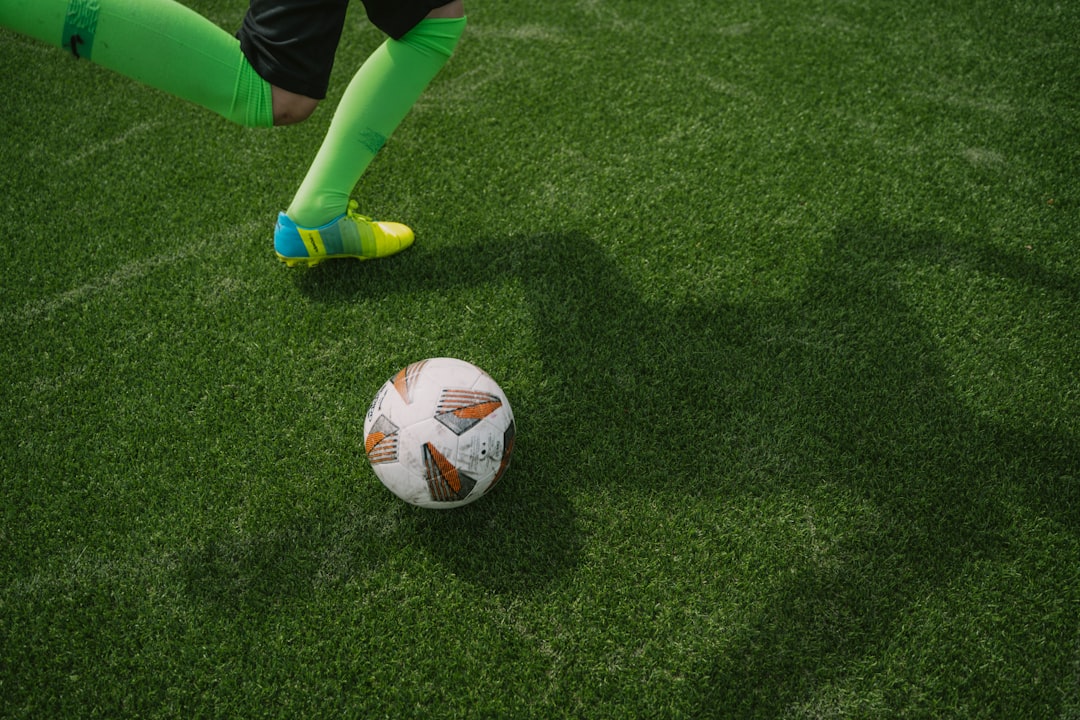
This guide uses soccer speed training as the starting point for the practical advice below. Soccer speed training looks simple when you watch a player burst past a defender, but the work behind it is usually much more deliberate than that. The best sessions do not chase random sprint volume. They build the kind of speed that shows up in real matches, where the first two steps matter, the next touch must stay clean, and the body has to change direction without losing rhythm. This guide breaks that process into practical parts, with ideas you can use on the field, in the gym, or in a small local park. If you want more sport-focused articles like this, the Mstyle4Life sports section is a good place to start.
I am keeping the focus on useful details rather than training myths. That means acceleration, top speed, agility, and session design. It also means looking at how speed work fits with the rest of the week, because a fast session done at the wrong time can leave the next practice flat. By the end, you should have a clearer picture of what soccer speed training is meant to do, what it should not do, and how to build a simple plan that holds up across different ages and levels.
What soccer speed training actually means
When people hear speed training, they often picture straight-line sprinting and nothing else. In soccer, that is only part of the story. A player needs to accelerate out of a turn, react to a loose ball, hold form while running under fatigue, and arrive in position without wasting steps. That is why soccer speed training should be seen as a blend of movement quality, nervous system readiness, and football-specific timing. It is not just about running faster in a straight line. It is about reaching useful speed at the right moment.
That distinction matters because soccer is messy. A player rarely gets a clean runway. There is usually a pass to read, an opponent closing space, a touch to control, and a decision to make. So when you plan speed work, ask a simple question. Does this exercise make the player faster in a match, or only better at looking fast in a drill? If the answer is only the second one, the session needs a rethink.
The most useful way to define speed in soccer is this. Speed is the ability to produce the right movement, at the right time, with the right amount of force. That includes acceleration, maximum velocity, repeat sprint ability, and the ability to reorient the body after braking. Each one shows up in a slightly different way. A winger may need explosive first-step speed to get behind a fullback. A center back may need quick recovery runs. A midfielder may need enough total speed to cover space repeatedly without falling apart in the second half. The training should match those realities, not just a stopwatch number.
One more thing matters here. Good speed work should make practice look cleaner, not more chaotic. If a player is always grinding through tired sprints, or if every session leaves the legs heavy for days, the plan is not helping enough. Effective soccer speed training is sharp, focused, and recoverable. The best sessions often feel short. That is not a weakness. It is usually a sign that the work is specific and the rest periods are long enough for quality.
The four speed qualities that matter on the pitch
Most players are told to get faster, but that goal is too broad to be useful. It helps more to break speed into four qualities. The first is acceleration. This is the ability to build speed quickly from a standing start, a shuffle, or a changing situation. In soccer, acceleration often matters more than the absolute top speed seen in track-style sprinting, because most game actions happen over short distances. The second is maximum velocity, which is the highest speed a player can reach when given enough space. The third is repeat sprint ability, which is the capacity to hit several hard efforts across a session or match. The fourth is deceleration and reacceleration, which is the ability to slow down, absorb force, and go again without turning the movement into wasted motion.
If you look at your roster through that lens, the training starts to make more sense. Younger players may need a lot of acceleration work and basic coordination. Older players may already know how to run but need help managing fatigue and keeping technique sharp. Wide players often benefit from more top-end exposure. Central midfielders often need more repeat sprint work and sharper change-of-direction patterns. Defenders and attackers may need different mixes depending on style of play. There is no single speed session that solves every problem.
A quick comparison helps. Acceleration is about the first few steps. Maximum velocity is about the tall, relaxed, fast sprint once the body is moving. Repeat sprint ability is about how the player responds when the game asks for another burst after the first one. Deceleration and reacceleration are about control. A lot of players think they are slow when the real issue is that they lose too much time before or after a movement because they cannot brake cleanly. That is a technical problem as much as a physical one.
A good coach does not treat these qualities as separate worlds. They overlap. A strong acceleration base makes top-speed work more useful. Better braking mechanics make cuts and transitions smoother. Repeated exposure to quality sprinting helps the player stay coordinated when the match gets frantic. So instead of asking for more speed in general, decide which quality is missing and train that quality directly.
- Acceleration helps with first steps and short bursts.
- Maximum velocity raises the top end of open-field running.
- Repeat sprint ability supports repeated actions late in games.
- Deceleration and reacceleration keep movement sharp during transitions.
Soccer speed training starts with acceleration
If I had to choose one place to start, I would start with acceleration. Not because top speed is unimportant, but because acceleration shows up everywhere in the game. A player accelerates after a pass, after a turnover, after a pressing trigger, after a cut, and after a missed touch. That makes acceleration the foundation of almost every other movement pattern. It is also easier to coach than many people think, because the key details are simple. The player needs a forward body angle, a strong first push, a short ground contact, and enough rest to keep each rep sharp.
Acceleration work should usually be short. Think 5 to 20 meters rather than endless sprint repeats. The goal is not to turn the session into conditioning. The goal is to teach force application. Good drills here include resisted starts, hill sprints with a moderate slope, three-point starts, split-stance starts, and reaction starts off a cue. I like short sets because they preserve quality. Once the player starts drifting into sloppy mechanics, the session has already given most of what it can give.
The technical cues do not need to be fancy. Ask for a strong push back into the ground. Ask the player to stay patient for the first step rather than jumping upright too early. Ask for arms that drive in the same direction as the legs. Ask for a trunk that stays stable instead of wobbling side to side. The body should feel aggressive, but not rushed. There is a difference between powerful and chaotic.
A simple acceleration block might look like this. After a thorough warm-up, the player performs four to six short sprints of 10 meters with plenty of rest. Then the player completes two to three resisted starts with a sled, partner resistance, or uphill run. The point is to keep each rep fast enough to matter. If the speed drops too much, stop the set. That rule protects the quality of the session and keeps the nervous system fresh for the next hard effort.
Another useful idea is to make the start itself game-like. Instead of always using a static stance, use a shuffle, a backpedal, a check run, or a turn into the sprint. That keeps the athlete learning how to explode from shapes that resemble soccer. The best acceleration sessions do not look like track practice with cones. They look like controlled, purposeful football movement with one clear goal.
Build top speed without losing control
Once acceleration is in place, top speed becomes more valuable. This is the phase where a player learns to run fast without tightening up. Many athletes make the mistake of trying to force speed with effort alone. They sprint hard, clench everything, and end up moving slower than they should. True top speed looks almost relaxed. The posture is tall, the contacts are quick, the hips stay open, and the body feels like it is moving under control rather than fighting the ground.
Top-speed work needs a little more space than acceleration work. Flying sprints, build-up runs, and long accelerations into timed zones can help here. The idea is to let the player reach high velocity without a panic start. A typical setup might include a controlled buildup over 20 to 30 meters, followed by 10 to 20 meters of near-maximal running. The buildup matters because it teaches rhythm. It gives the athlete a chance to organize posture before the fastest part of the run begins.
That rhythm matters in soccer because many fast actions are not born from a dead stop. A player may already be moving when the ball is played. That means the body needs to absorb, organize, and then release speed. Top-speed work helps with that. It also exposes the athlete to a stride pattern that is different from the short, forceful first steps used in acceleration. Both patterns matter. If you only train starts, the player can become explosive but still look heavy once open space appears.
Keep the dose small. Top-speed work is demanding, and it does not need a huge number of reps to be useful. Two to five quality efforts can be enough in a session when the rest periods are long and the athlete is fresh. If the quality starts to drop, end the block. This is not the place to squeeze in extra volume just to feel busy. In speed training, more is not automatically better. Better is better.
One of the cleanest coaching reminders for this phase is simple. Tell the player to run tall, stay loose in the face and shoulders, and strike the ground under the body instead of reaching too far in front. That is usually enough to improve the feel of the rep without cluttering the mind. When top-speed work is done well, it often makes the athlete look smoother, not just faster.
Agility and change of direction are not the same thing
People often use agility and change of direction as if they mean the same thing. They do not. Change of direction is the physical ability to brake, turn, and reaccelerate. Agility is that same physical skill plus a decision. In other words, agility includes reacting to something. A player responding to a feint, a pass, or a pressing cue is doing agility. A player running a cone drill with no decision is doing change of direction. Both can be useful, but they train different parts of the game.
This matters because soccer is full of open-ended movement. A defender cannot just be good at preplanned cuts. The defender has to read body shape and react. A winger has to alter pace based on a teammate’s touch. A midfielder has to scan, choose an angle, and then move. So if your entire agility plan is built around neat cone patterns, you are only getting part of the picture. The body learns to move, but the player does not learn to decide.
A strong change-of-direction drill should respect the mechanics of braking. The athlete should lower the center of mass, take a controlled final step, absorb force through the hip and trunk, and then drive out of the cut. If the player is spinning wildly or overstriding before the plant, the rep is teaching bad habits. Start with simple angles and clean footwork. A 45-degree cut is often more valuable than a dramatic, messy 180-degree turn. The best pattern is usually the one the player can repeat well.
To make the work more soccer-like, add a decision layer. Use visual or verbal cues. Use a ball. Ask the player to react to a partner. Ask them to turn one way if a number is called and another way if a color is called. The decision itself does not need to be complicated. The point is to connect the movement to perception. That is where the transfer to the game starts to improve.
When I look at many amateur programs, I see too much rushed cutting and too little braking quality. Players love the feeling of quick feet, but the feet are rarely the problem. The problem is often the first and second steps after the brake. Clean those up, and the player usually looks sharper without needing a dozen different ladder drills.
How to plug speed into a weekly plan
Speed work goes wrong when it gets treated like a separate hobby. It should fit into the week with a purpose. The biggest question is not how many speed drills you can cram into seven days. The real question is where the highest-quality work belongs, and how you keep it from ruining the next session. For most players, two focused speed exposures per week is enough when the rest of the training load is already meaningful. Some players will need less. A few advanced athletes may tolerate more. The session should always match the broader week.
Here is a simple way to think about it. Put the hardest speed work on a day when the player is freshest, usually after a good warm-up and before any long fatigue blocks. Keep acceleration and top-speed work in separate chunks if possible. Use one session for short explosive work and another for more open-space running, or combine them carefully if the total volume is low. Leave enough space between demanding sessions for the body to recover and for the next practice to feel alive.
A youth player who trains twice a week might use one day for acceleration and change of direction, and another day for a few short top-speed efforts plus small-sided play. An amateur adult with two team sessions and a weekend match might place the main speed work early in the week, then keep the second session light and technical. A more competitive player might mix speed into tactical work, but still make sure at least one truly fresh exposure happens each week. The common thread is quality control. Speed work only works if the athlete is capable of producing real speed while doing it.
The best weekly plans also respect the match calendar. If the game is on Saturday, a heavy speed session on Friday usually makes little sense. If the player had a hard match on Sunday, Monday may be a better recovery day than a speed day. This sounds obvious, but it is where many good ideas fall apart. The calendar is part of the program. Ignore it, and the training will fight itself.
If you want a quick rule, use this. Hard speed on fresh legs. Light technical work when tired. The body learns different lessons from each setting, and both matter.
Coaching cues and mechanics that make a difference
Good coaching cues do not need to sound clever. They need to change movement. The best cues are usually short, physical, and easy to feel. In soccer speed training, that often means cueing posture, shin angle, arm action, trunk stiffness, and foot contact. These are not fancy ideas. They are the details that decide whether a sprint looks smooth or broken.
For acceleration, I like cues such as drive back, stay low for the first steps, and punch the ground. For top speed, I prefer run tall, stay loose, and step down under the hips. For change of direction, I use sink, brake, and push out. None of those phrases solve everything, but they help the athlete focus on the action that matters most in that moment. If I give too many cues at once, the player starts thinking too hard and moving worse. That is why one or two cues are usually enough.
Mechanics also improve when the athlete gets visual feedback. A short video can reveal whether the body is folding at the waist, overreaching, or crossing over too much on the plant leg. Sometimes the athlete thinks they are fast because the rep felt intense, but the video shows wasted motion. That feedback is useful because it creates a cleaner link between effort and result. The player learns that speed is not a feeling. It is a pattern.
One practical cueing habit is to attach mechanics to task goals. If the drill is about the first three steps, do not spend the whole time talking about stride frequency. If the drill is about braking, do not overload the player with arm mechanics from a top-speed session. Match the cue to the task. That keeps the athlete focused and helps the movement stick.
There is also a mental side to all this. Players often get tense when they are told to be fast. That tension is normal, but it can block useful movement. Good coaching lowers the noise. It gives the player a clear start point, a clear target, and enough rest to try again. That is where mechanics improve fastest, because the athlete can repeat the rep without guessing.
Warm-up, recovery, and maintenance between sessions
Speed work should not begin with a cold body and a rushed mind. A proper warm-up is part of the training, not a side note. The goal is to raise temperature, open range of motion, wake up the nervous system, and prepare the feet and hips for quick force production. That can include light jogging, mobility work, skips, build-up runs, and a few low-intensity accelerations. If the player cannot feel a smooth transition into harder work, the session is probably starting too abruptly.
I like warm-ups that move from general to specific. Start with easy locomotion and dynamic movement. Add change-of-direction shapes. Add low-volume sprinting. Then move into the main work. That sequence gives the body time to organize. It also gives the coach a chance to watch for stiffness, poor rhythm, or obvious fatigue before the intense reps begin. If a player looks flat during the warm-up, the answer is not always to push harder. Sometimes the answer is to adjust the day.
Recovery matters just as much. Speed training is high quality work, and high quality work needs room to breathe. After a demanding session, the body can benefit from easy movement, solid hydration, good sleep, and enough food to support the week. There is no need to turn recovery into a ritual. Keep it practical. Walk, stretch lightly if it feels good, get off your feet when you can, and come back fresh for the next exposure.
Maintenance is where a lot of players lose momentum. They make a little progress, then stop doing the small things that kept the progress alive. Maintenance can be as simple as a few fast strides in warm-up on non-speed days, some short hill accelerations in the off-season, or a weekly exposure to top speed even when the main goal is tactical work. The body responds well to regular reminders. It does not need to be shocked every time.
Think of recovery and maintenance as the bridge between hard sessions. If the bridge is weak, the next speed day suffers. If the bridge is strong, the athlete can train with more consistency and less drift. That consistency is what usually creates the biggest change over time.
How to measure progress without guesswork
Players often want proof that the work is helping, and that is fair. But not every useful measure needs expensive timing gates or a lab. You can learn a lot by watching a few simple markers. Is the first step cleaner? Does the player look less awkward when changing direction? Can they hit the same speed with less visible effort? Do repeated efforts stay sharp later in the week? Those are useful signs, even before any formal testing.
If you do have access to timing, keep the process simple. Use the same distance, the same surface, the same start position, and similar rest periods each time you test. Short sprint tests can track acceleration. Flying sprint segments can reveal top-speed changes. Repeated sprint tests can show how the athlete handles back-to-back efforts. The more consistent the setup, the more useful the comparison. Without consistency, the numbers are mostly noise.
Video also helps. A clip from the side can show whether the shin angle is improving during acceleration. A clip from the front can show whether the athlete is collapsing inward on a cut. A clip at top speed can reveal posture, arm action, and tension in the upper body. This is one reason I like using video with soccer speed training. It does not just confirm speed. It shows the mechanics behind the speed.
Progress should also show up in how the player feels during game actions. Maybe the winger now gets separation more easily in the first five meters. Maybe the midfielder reaches a loose ball a half-step earlier. Maybe the defender recovers with less panic. Those are real outcomes. The training exists to improve them, not just to produce a better number on a screen.
A quick self-check can help. Ask three questions after four to six weeks of work. Does the athlete move better? Does the athlete repeat speed better? Does the athlete look more effective in game-like actions? If all three answers trend in the right direction, the plan is working.
Common mistakes that waste time
One common mistake is chasing fatigue instead of speed. A session full of tired sprints may feel hard, but hard is not the goal. Quality is. If the player is dragging by rep four, the nervous system is no longer getting the right signal. Another mistake is using too many drills and too little rest. The player ends up busy, not better. In speed work, rest is part of the stimulus. It lets the next rep stay fast enough to matter.
A second mistake is ignoring the match context. A great speed session placed on the wrong day can flatten the next practice or make the player stale for the weekend. A third mistake is spending all the time on ladder work, quick-feet patterns, or cone dances that look sharp but do not teach the athlete how to accelerate, brake, or react in real space. Those tools can be fun, but they are not the center of the plan.
A fourth mistake is confusing effort with intent. A player can try very hard and still move poorly if the cues are unclear. This usually happens when coaches overload the athlete with too much technical information. The athlete starts thinking about ten body parts at once, and the movement falls apart. The fix is not more words. The fix is better sequencing and fewer cues.
A fifth mistake is neglecting strength and tissue capacity. Speed is a skill, but it also depends on the body’s ability to handle force. If the lower body is weak, unstable, or poorly prepared, the athlete may struggle to express speed consistently. That does not mean every player needs the same gym plan. It means speed and strength should support each other.
Finally, many programs forget that progress is seasonal. A player may not hit a personal best every week. That is normal. The real question is whether the movement quality, confidence, and match impact are moving in the right direction over time. If they are, the plan deserves to stay. If they are not, simplify it and rebuild from the basics.
A practical six-week progression
If you want a simple way to organize soccer speed training, use a six-week block that starts small and builds in layers. In weeks one and two, focus on acceleration mechanics, short starts, and clean body positions. Keep the reps short and the rest generous. The goal is to teach the athlete how speed should feel when the body is fresh and organized. Add a few light change-of-direction shapes if the player is ready, but keep the session easy to recover from.
In weeks three and four, add more variation. Use different starting positions. Introduce a little top-speed exposure through build-up runs or flying efforts. Add a decision element to one or two drills so the athlete begins reacting rather than just rehearsing. This is also a good time to watch whether the athlete can maintain quality when the drill gets a little more complex. If the quality drops, simplify before adding more volume.
In weeks five and six, increase the realism. Put more of the work into game-like movement patterns. Use short reactive sprints, cuts off a visual cue, and repeated efforts with full intent. If the player is a winger, make some of the work feel like separation runs. If the player is a defender, add recovery patterns. If the player is a midfielder, add more repeated movement with short pauses. The same speed qualities still matter, but the context becomes more specific.
Across the whole block, keep a log of what was done and how it felt. You do not need a complex spreadsheet. A few notes on distance, number of reps, and perceived quality are enough to spot patterns. If the player stays sharp, the block can continue. If the athlete begins to look stale, reduce the load for a week and bring the intensity back up later. That is not a setback. It is part of maintenance.
Speed training works best when it respects the game, respects the body, and respects the calendar. Keep those three things in view and the work starts to make sense. The player gets faster in ways that matter, the sessions stay manageable, and the progress has a better chance of holding up when the match gets chaotic.
